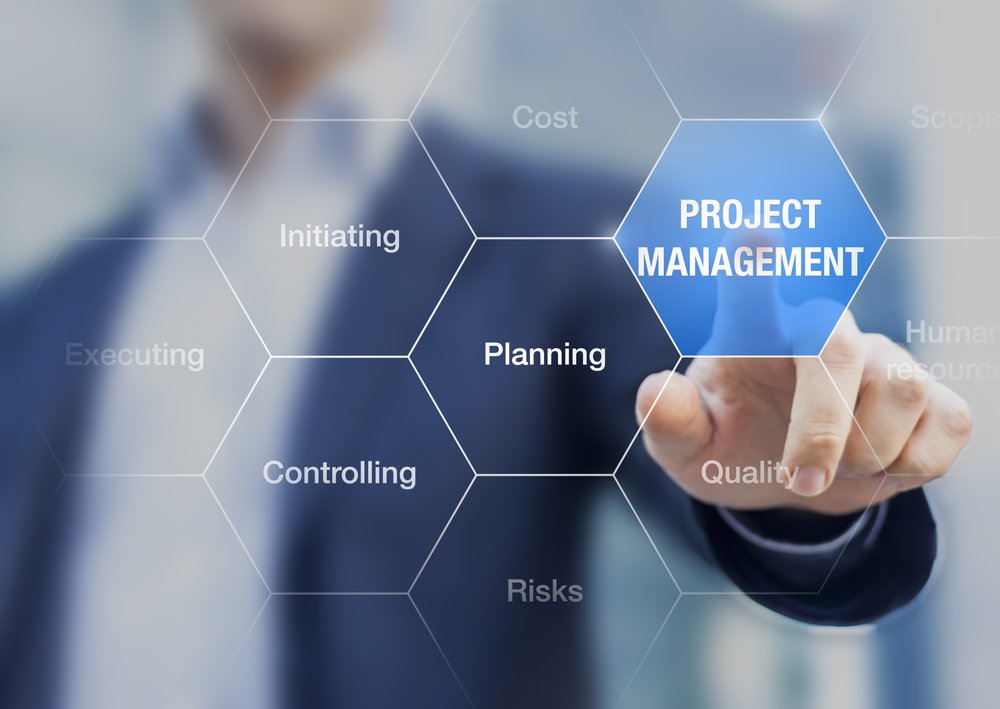
The role of the project manager in Romania is changing quite a bit right now. By 2026, success will no longer be measured by the usual factors, such as time, scale and budget, but by our ability to manage complex situations generated by artificial intelligence (AI) and continuous change. This means we need to move from simply getting things done to creating value.
Romania is at a critical juncture, using a large part of EU funds to finance large infrastructure projects, but at the same time facing major political and financial challenges. And then there is the extremely strong ICT sector, which is an important driver of economic growth. Therefore, the role of the project manager must change. As highlighted by the PMI Romania Chapter, the focus is shifting towards goal-oriented leadership and continuous development in the context of AI and the future of work. This article analyzes the main sectors, the impact of AI and other disruptive technologies, and presents the essential skills for 2026.
The project landscape: a tale of two sectors
To understand the future of project management in Romania, it is important to analyze the two industries in which this discipline is most important: the constantly evolving IT sector and the construction industry, essential to the economy. Their unique qualities create a two-faceted landscape, and the project manager of 2026 must be able to cope with this situation.
Digital Dynamics: IT and Software Development
The ICT sector in Romania is a real economic force, with a thriving outsourcing market. This growth is concentrated in technology hubs such as Bucharest and Cluj-Napoca, where global giants and local companies have created a vibrant ecosystem. In terms of working methods, this sector is based on agile practices, with Scrum as the reference framework. This has led to a project environment focused on short and iterative sprints, cross-functional teams and continuous delivery. The role of the software project manager has changed a lot over time, often starting with senior engineers. This has led to the emergence of the role of the “technical project manager”, with a solid engineering background.
Foundation Builders: Construction and Infrastructure
The construction sector in Romania is very different. It all boils down to large projects, which take a long time and require large investments, mostly from the EU. Formal project management is a necessity, given the complexity and risk of this project. The way of working is usually more traditional, with strict control over aspects such as scope, time and cost, as well as a focus on quality, safety and compliance. The project manager in this field is usually a specialist who knows engineering very well, but also has formal management skills. The sector has always been a bit slow in terms of innovation, but is currently undergoing a major digital transformation. The use of building information modeling (BIM) software and sophisticated project management platforms is now a necessity.
Emerging methodological hybridization
IT and construction are starting to merge, all thanks to digital technology. This means we need hybrid project management models that combine the discipline of traditional frameworks with the flexibility of Agile. Today, large-scale infrastructure projects have huge digital components, such as IoT sensor networks and sophisticated control systems. The way they are physically built is best done using a traditional Waterfall approach, but the technology layer requires an Agile, iterative process. The successful project manager of 2026 will be a “methodology integrator,” someone who can orchestrate this combination, manage critical interface points between the two worlds, and speak the language of both long-term planning and short-cycle, adaptive execution.
AI Co-Pilot: Complementing, not replacing the project manager
AI will not make project managers redundant, but rather enhance their role by acting as a powerful “co-pilot.” By taking over routine tasks and providing amazing analytical capabilities, AI will free up project managers to focus on strategic, human-centric, high-value activities.
From administrator to strategist: how AI is redefining PM tasks
Integrating AI into project management tools is fundamentally changing the daily work of a PM. By 2030, an estimated 80% of traditional administrative tasks, such as data collection, tracking, and reporting, will be performed by AI. This change is happening through automation and augmentation. AI can automate tasks like scheduling and drafting communications, freeing up the project manager to become a strategist. What’s really important is that AI can help you make better decisions by using predictive analytics to make predictions, running simulations, and optimizing how you use resources. These capabilities lead to measurable improvements, including shorter project durations, lower costs, and higher success rates.
The AI adoption curve
Romania is on par with the rest of the world in the AI revolution. The country’s strong IT sector is an excellent place to develop AI, which is already used by over half of public administration employees. Behind this success are strong leadership, competition and government digitalization initiatives. However, there are still some major problems, such as the lack of adequate digital skills, too high implementation costs and issues related to data quality and how it can be integrated with legacy systems.
The project manager as AI orchestrator and ethics guardian
The project manager of 2026 will be more than just a user of AI software; they will be an AI orchestrator and an ethics guardian. This means leading the strategic implementation of customized AI and machine learning (ML) solutions, which have a distinct lifecycle that the project manager must coordinate. Additionally, the use of AI can cause some pretty serious ethical issues, such as algorithmic bias and data privacy issues. These are some major risks to the project, and the project manager must manage them by discussing them with stakeholders and ensuring that fairness, accountability, and transparency are built into the project from the beginning. This means that the project manager’s focus shifts from managing processes to governing technology and leading people.
Navigating the Vortex: Resilience and Adaptability in a Disruption-Prone World
The second important aspect is that the environment is constantly changing. In this case, it is not just a bonus, but a necessity.
The context of the disruptions
For project managers in Romania, disruptions are a reality. The main causes of this volatility are geopolitical instability in the region, domestic political and fiscal uncertainty, and ongoing supply chain and market volatility. This type of environment makes project financing difficult, costs can be highly variable, and it is difficult to make long-term plans, making projects highly vulnerable to external shocks that can upset even the best-laid plans.
The Resilient Project Manager’s Guide
Overcoming this difficult situation requires a solid approach to project management. This means adaptability, a key tenet in modern standards like the PMBOK® Guide. You need to be down to earth and have a solid plan in place to deal with any surprises before they arise. Ultimately, it all comes down to building resilient teams by creating an environment where everyone feels safe to speak up, making sure everyone is on the same page, and encouraging collaboration to solve problems.
Improvisation as a weapon: from cultural trait to strategic capability
A unique aspect of the Romanian context is the cultural tendency towards improvisation. In the traditional way of thinking, this could be considered a negative thing. But in a world where things seem to be constantly changing, this can be turned into a real strength. The key is to move from unstructured improvisation to structured adaptability. If you are a project manager and use frameworks like Agile, with short sprints and regular retrospectives, you can capitalize on this natural talent. This approach considers “improvisation” as “structured execution of contingencies”, turning a possible cultural problem into a unique way of dealing with changes that are part of the normal business of a company.
Portfolio of essential skills for the project manager
Romania’s key sectors are changing rapidly, and the forces of AI and disruption are playing a major role. This means new skills are needed. If you are a project leader and are good at digital technology, strategy and people, you will probably be successful.
Digital and Analytical Core (Ce)
- AI and data literacy: a fundamental understanding of AI, machine learning, and data analytics to make informed, data-driven decisions and critically evaluate AI-generated recommendations.
- Technological and platform skills: fluency in using modern collaboration management tools (Asana, Jira) and enterprise-level systems used in construction and other industries.
- Methodological fluency (hybridization): The ability to combine traditional and agile frameworks into effective hybrid models, tailored to the unique needs of a project.
Strategic mindset (why)
- Commercial and business acumen: The ability to think like a business leader, understand organizational strategy, and ensure that projects deliver tangible business value.
- Advanced Financial Management: Skills that go beyond basic budget tracking, including ROI analysis and dynamic cost management, to navigate an uncertain fiscal environment.
- Systems thinking: The ability to recognize and respond to complex interactions between a project and its broader environment, from policy changes to supply chain disruptions.
Human-Centered Competencies (How)
- Visionary and adaptive leadership: As AI manages tasks, the project manager must lead people by setting a clear vision, inspiring teams, and demonstrating high emotional intelligence.
- Stakeholder Influence and Communication: Ability to translate complex technical concepts and data-driven information into language that non-technical stakeholders can understand and act upon.
- Radical adaptability and resilience: The mental and emotional strength to thrive under uncertainty, learn from failures, and change strategies effectively when faced with inevitable shocks.
Cultivating the Next Generation: Recommendations for Individuals and Organizations
To put these skills into practice, individual project managers and the organizations that employ them must collaborate.
For the Individual Project Manager: A Roadmap for Continuous Evolution
If you want to be resilient in your career, you need to commit to continuous development. People should embrace lifelong learning, develop T-shaped expertise (deep knowledge in one area, broad knowledge in others), and seek out specific professional training. It is very important to invest in top-notch project management courses that address the skills gap in Agile, hybrid methods, and AI. Using professional networks, such as the PMI Romania Chapter, is also very useful for growth, getting advice, and staying up to date with trends.
For organizations and leaders: building a future-ready PMO
Organizations need to be able to deliver projects in a competitive manner. This means investing in training project managers, supporting them in obtaining advanced certifications, and reimagining the Project Management Office (PMO) as a strategic center of excellence. The PMO of the future will experiment with new AI tools, make hybrid methods the norm, and help project managers improve their strategic and leadership skills. It is also very important to foster a culture of adaptability and psychological safety, where failure is a learning opportunity.
Conclusion
The role of the project manager in Romania is changing a lot right now. The project manager who will come out on top in 2026 will be someone who is tech-savvy, puts people first, and has a strategic mindset. They will use AI as a reliable aid to improve their own strategic skills. They will capitalize on Romania’s natural talent for adapting to new situations and do so in a way that is appropriate for today’s ever-changing world. Ultimately, the project manager of 2026 will be essential, not for managing constraints, but for their ability to manage complexity, lead with empathy, and create real value for the business. For a country like Romania, it is very important to grow this new generation of project leaders.