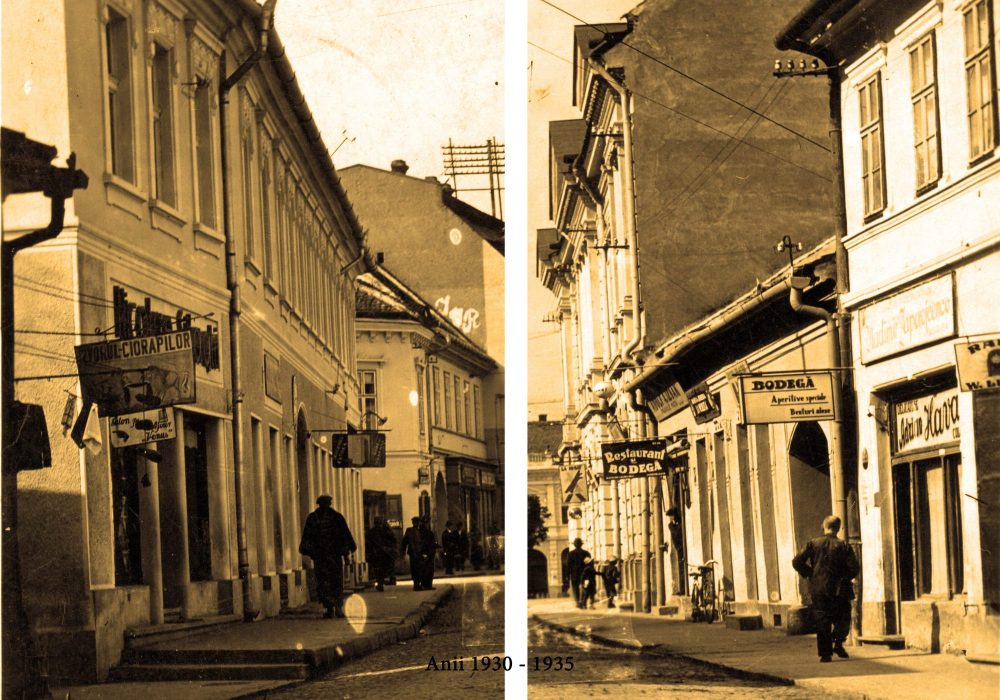
Very rarely is the elite of Făgăraș, those who wrote history, spoken of. It’s as if they want to be forgotten forever. No one knows about the United priest Valeriu Crișan, born in Ohaba. The last time he was spoken about was at a symposium organized by the „Negru Vodă” Cultural Foundation in November 2018. The foundation has also not stood out since it was left without a headquarters in Făgăraș, thanks to the Făgăraș City Hall. It was the only foundation that invited the city to cultural and historical events. The Monitorul de Făgăraș brings old personalities from Făgăraș to the readers, clearing away the dust from the old documents that are still preserved.
Forced by communists to convert to Orthodoxy
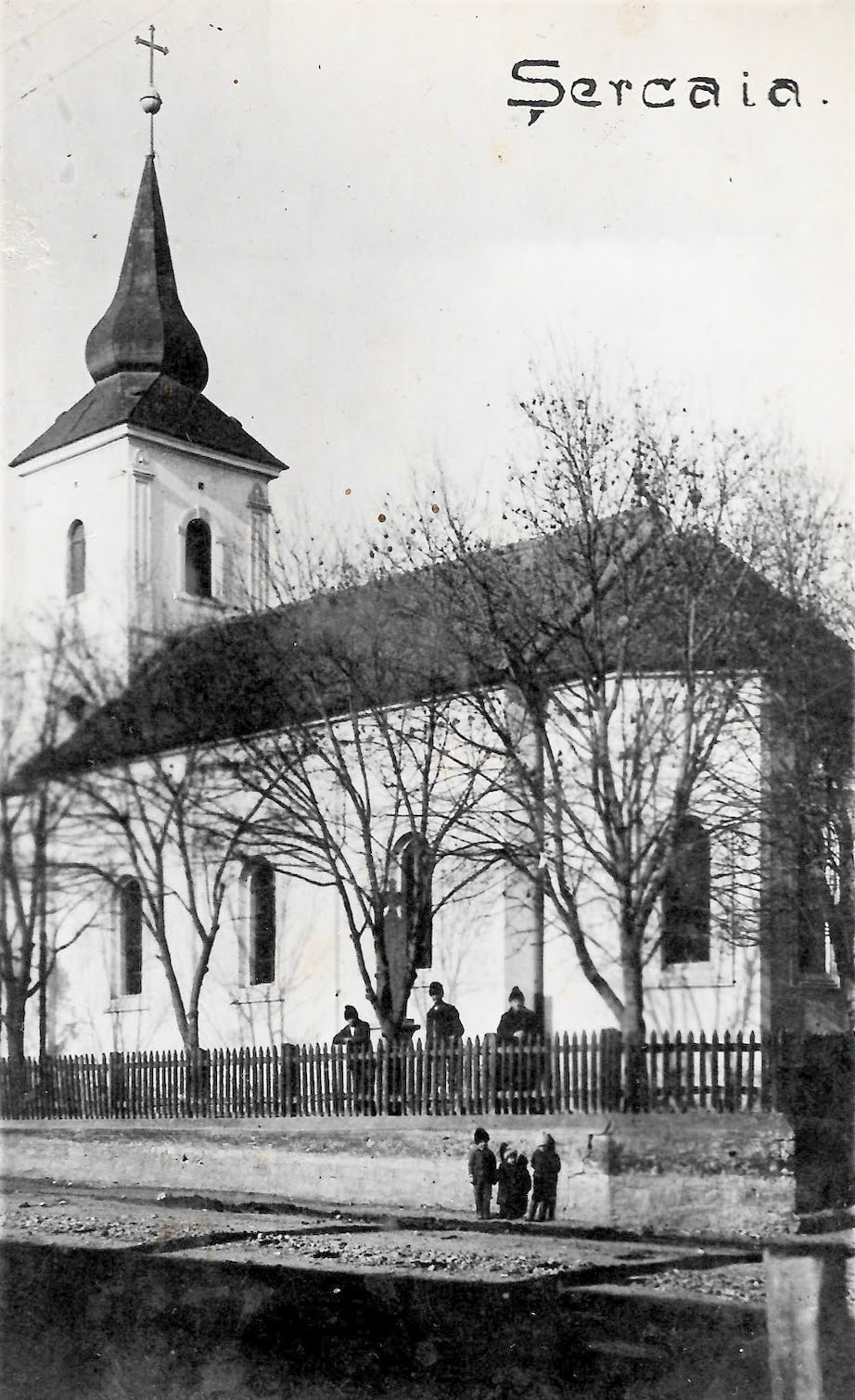
From Ohaba arose a united priest, Valeriu Crișan, who pastored the communities in Mărgineni and Sebeș, then settling in Șercaia. The communist regime, through the harsh methods applied, forced Fr. Valeriu Crișan, after 1948, to convert to Orthodoxy. He lived another 14 years as an Orthodox priest, in 1962, in April, he passed away. Fr. Valeriu Crișan was married to Eugenia Șenchea, none other than the granddaughter of the great martyr Ioan Șenchea, whose name is today the agricultural medicine in Făgăraș. The priest was short in stature and always had something to do. After the assassination of Ioan Şenchea, it seems that he too was shot by Austro-Hungarian soldiers. Then he was forced to go on a wandering path to Ploiesti, in Russia and then to Iasi.
Priest in Şercaia, gets involved in community life
Starting with February 1926 he was a united priest in Şercaia and remained there as an Orthodox priest after 1948. In 1932 he built the school and kindergarten, restored the Romanian brass band, exhumed the remains of the Romanian soldiers who fell in the battles around Hălmeag and of the Romanian scouts murdered by the Austro-Hungarians, after they were shot by a local Saxon. He was a social educator and of the Roma in Şercaia.
Journalist at „Olteanul” and „Oltul”
He was a creator of literary works, a publicist, a journalist. In 1909 he published a children’s sketch. He wrote political articles in the local newspapers „Olteanul” and „Glasul Oltului”. A fervent nationalist, he supported the cause of the Romanian National Party and the National Peasant Party, of which he became a member. During 1909-1914 he was the editorial secretary of „Olteanul” and then, after 1914, an editor. From 1918 he wrote for the newspaper „Oltul” and was a correspondent for the national dailies „Curentul” and „Adevărul” during the interwar period. He wrote „Memories of Wandering in Russia” and translated from the work of Maxim Gorky. His son, suggestively named Horia, Cloşca and Crişan, returned wounded from World War II.
Constantin Pop’s typography

The oldest Romanian printing house in Făgăraş was the Constantin Pop printing house, founded in 1906. We learn about it from the 1913 Monograph of Făgăraş by priest Nicolae Aron: „Mr. Constantin Pop, together with his wife, Mrs. Ludovica née Papfalvi, came to Făgăraş from Braşov, where he was for 15 years the factor of the A. Muresianu printing house at the „Gazeta Transilvaniei”. From 1902 onwards (Mr. Pop began his career in 1872 in the largest printing institute in Cluj), he came here and broke the ice of darkness in Făgăraş and its region, shining the first light from a Romanian printing house, first located in the houses in the main square of the lawyer Dr. Ioan Senchea, who still has the merit of having allowed this Romanian printing house to be installed in the houses of his reign, also contributing with his spiritual part in the editing of the first Romanian newspaper in Făgăraş entitled „Ţara Oltului”, whose editor was the Romanian teacher from Făgăraş Ioan Berescu” wrote Father Nicolae Aron. The Constantin Pop printing house continued its activity by moving to the houses of the Romanian merchant from Făgăraş Ioan Peia, where for five years the social, cultural and economic paper „Olteanul” was edited. ” Mr. Constantin Pop works only with Romanian apprentices and has edited several books printed here so far. With special preparation, the second Romanian printing house was established in Făgăraş, together with the bookstore of Mr. Jer. Preda, who first opened his bookstore in 1911 in the houses of Herman, and from 1912 the printing house in the houses of Mr. Costi Toma with new and modern machines and materials. I also remember the Romanian Compactoria Ioan Haţegan in Făgăraş, started in the years 1898-1900 next to the first Romanian bookstore „Minerva” in Făgăraş, founded by the entrepreneur in all directions Iuliu Dan, archpriest in company with Ioan Berescu, this compactoria has long been quartered in the houses of Romanoaia, today of the „Furnica ” institute, wrote Fr.
Haţiegan Printing House and the Oltul Newspaper
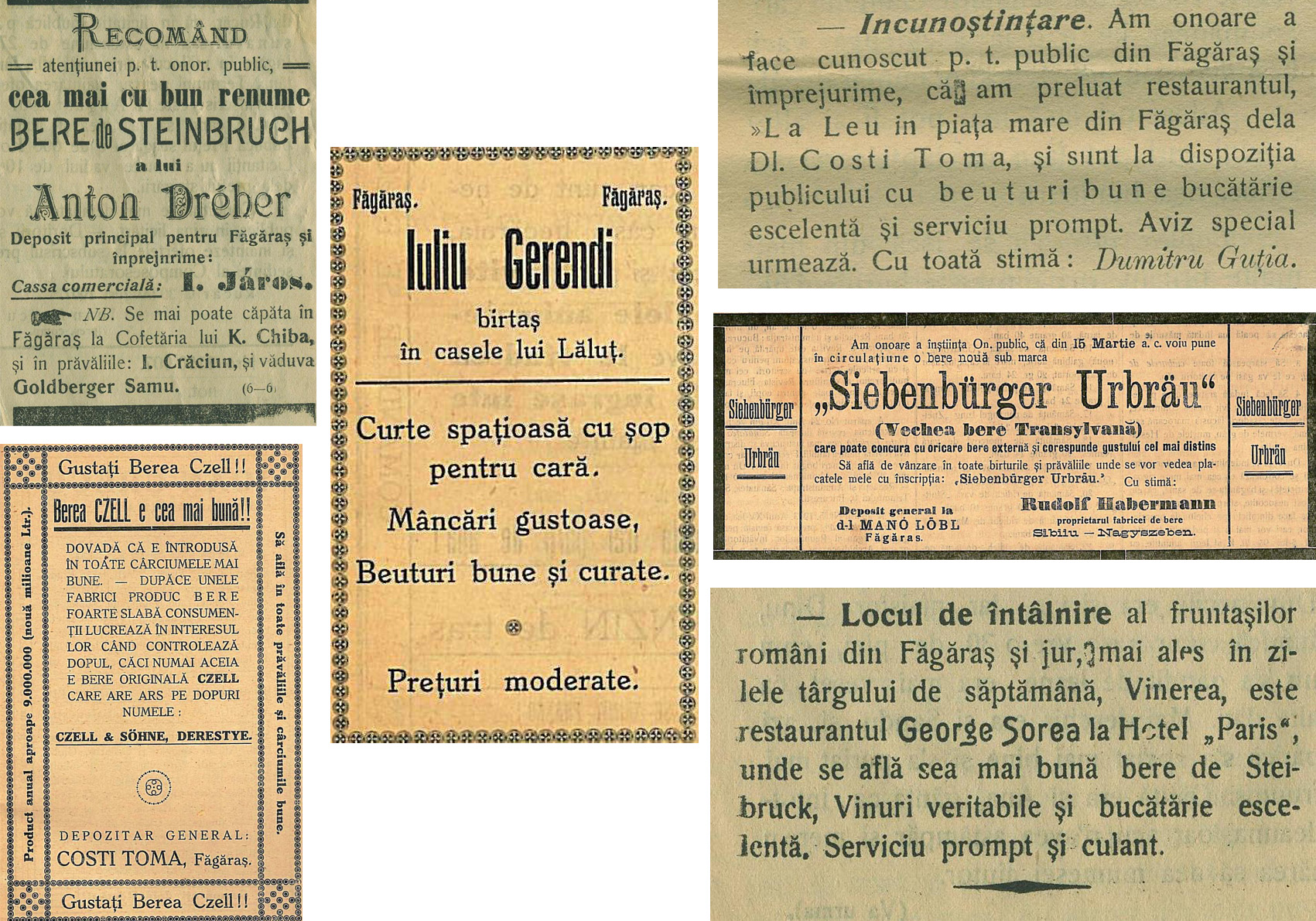
Another Romanian printing house in Făgăraş that belonged to Ion Haţieganu was located right in the Main Square in the center of the fair. The newspaper „Oltul” dated February 5, 1920 had the headline of the first advertisement of this printing house. „Bookbinding and Printing House „Romanian” – I. Haţiegan – Făgăraș, Piaţa Unirii” . It was also the printing house of the newspaper Oltul, the official newspaper of Făgăraș County in those years. This newspaper became, starting with May 11, 1920, a propaganda newspaper for Octavian Goga’s party, the People’s Party. As in our days, the political parties of that time bought newspapers that would play into their hands. In those days, however, the newspapers did not hesitate to be called publicly and in writing, even on their frontispiece, that they were political propaganda newspapers. Today, however, all newspapers and the media in general, even if they are official party newspapers, call themselves independent. This is also the case of the newspapers and TV stations in Făgăraș that are financed by the PSD mayor from public money, with the exception of making the Monitorul de Făgăraș. As I have already mentioned, Ion Haţegan started from the bottom, from a poor family in Sibiu. As a boy, he worked in a shop. For years he worked and managed to amass quite a fortune that helped him buy a house. It is the building where the Diana hotel operates today. Haţiegan had managed to have about three houses in Făgăraş by 1944. One of which he transformed into a bookstore that he took care of and supplied in a big city style, another he transformed into a stationery shop. His printing house was the most sought after at the time. He had a son who was a student at the Radu Negru High School, but who went to the front where he was killed in the battles at Cotul Donului. The loss of his child was a real tragedy for the famous bookseller and printer that the whole town was talking about. Because he was a bourgeois of the Făgăraş, the communists hid him in the Braşov Securitate Penitentiary where he died.
Lazar’s Printing House
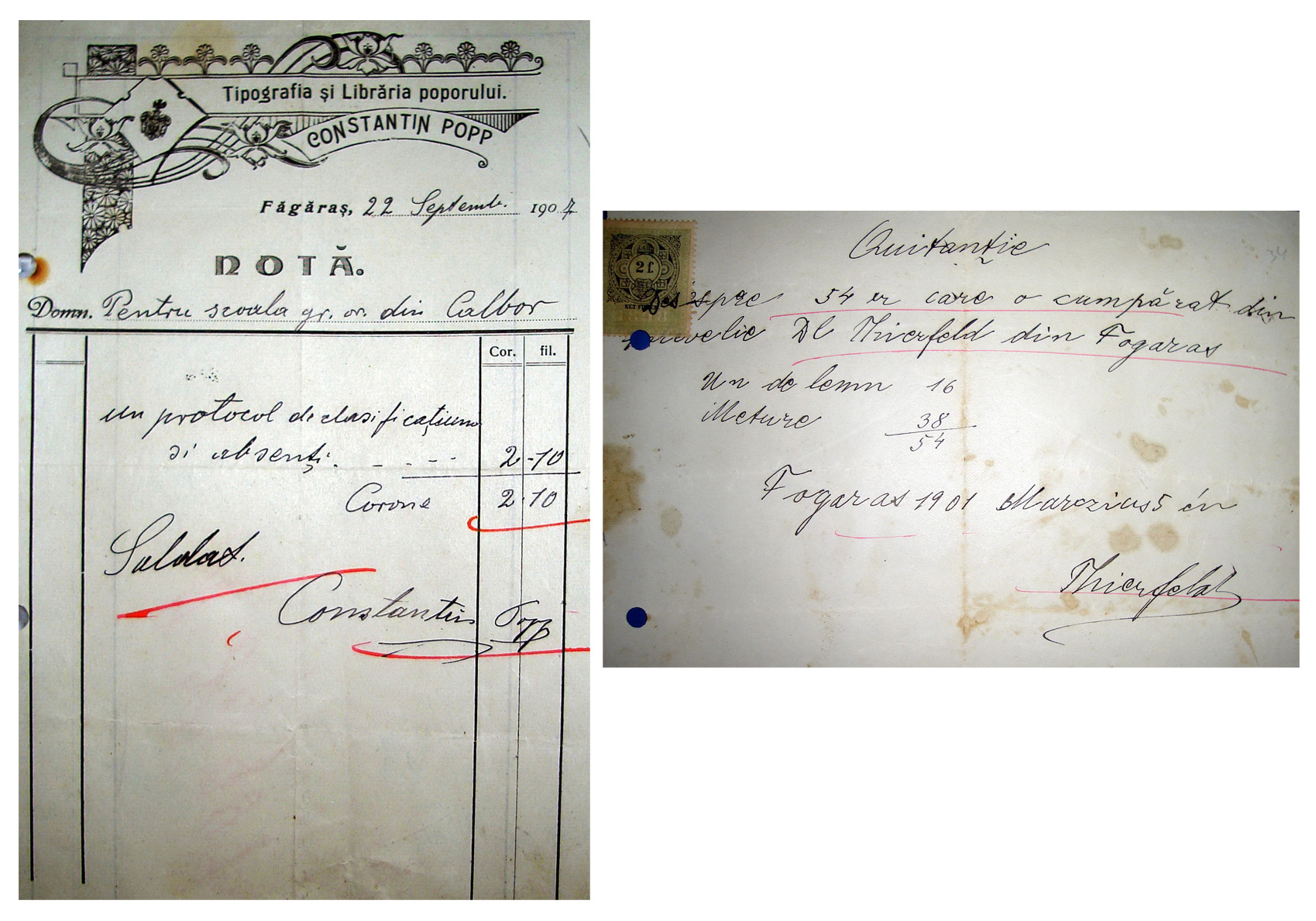
Another printing house with a bookstore operated on Regală Street at no. 2, today Mrs. Stanca Street. It belonged to Ioan Lazar. A beautiful, decorated bookstore stocked with goods and toys from Nuremberg was located on the corner of the Transylvania cinema and was managed by a Saxon woman. Another bookstore focused more on toys operated in the building next to the Haupt house, the building next to the current city hall. It belonged to a German woman named Fogel. She had a daughter who went to America where she stayed and who took the specifics of the family activity, doll making, across the ocean.
The first newspaper of old Fagaras
The first newspaper published in Făgăraş was „Tara Oltului”. Its structure, editing and content did not differ much from those of today. Even then, the aim was to write true information, pseudonyms were used, sources were protected, there were columns from all fields of activity, cultural, religious, educational information, news, city hall, announcements of all kinds. From the Făgăraş Monograph from 1913, we reproduce a document referring to the content of the first Făgăraş newspaper.
- „PT Sir! Making all the preparations, so that with the Romanian New Year we can publish in Făgăraş the weekly paper under the name „Ţara Oltului” for the defense and promotion of the many Romanian public interests of the population of Făgăraş county and the surrounding area, we take the liberty of informing you about this right now. And at the same time, knowing the interest you have in promoting our Romanian public affairs, as well as your willingness to work in this direction. Please allow us to count you among the collaborators, correspondents and informants of our editorial office. You will find the program and the principles by which we are led to write the paper „țara Oltului” that we will publish in the first issue that will appear on Thursday, January 3/1907. Until then, however, in the hope that you accept our invitation to give us your precious support and assistance in writing the paper, we allow ourselves to to you in general terms what kind of publishable material you could send us: 1. Articles, communications, ready-made correspondence or only short and true information about all the things, actions and events that happen in your commune or in neighboring communes: about church, school, communal, economic, industrial, commercial, forestry, social, social affairs, about aid and donations for church, school and cultural purposes. About cases of joy and sorrow in leading families. About productions, parties and exams. About auctions, exorbitants, sales, larger purchases, public and private. About possible abuses on the part of any public offices with the relevant written evidence. About misfortunes, beatings, thefts, greater prevarications, punishments and finally about all sorts of issues that touch more closely the entire public life of our people, its leaders and its institutions. The material sent will always be published with your signature if you wish, and when you wish it to be published under a pseudonym, you will publish it as such, guaranteeing your discretion with the greatest sanctity. II. We will also welcome material from folk literature, processed as poems, stories, original poems such as collections of stories, snoaves, legendary poems, carols, riddles, etc. You can send the material to me at the following address: The editorial office of the „Ţara Oltului” newspaper in Făgăraș by mail, by occasional couriers, or by bringing it in person. You are always welcome guests at our editorial office so that we can understand in many ways the causes and interests of the Romanian people. In general, we demand the truth in everything. Dr. Niculae Şerban, Dr. Ioan Şenchea, Dr. Octavian Vasu” . (Lucia BAKI)